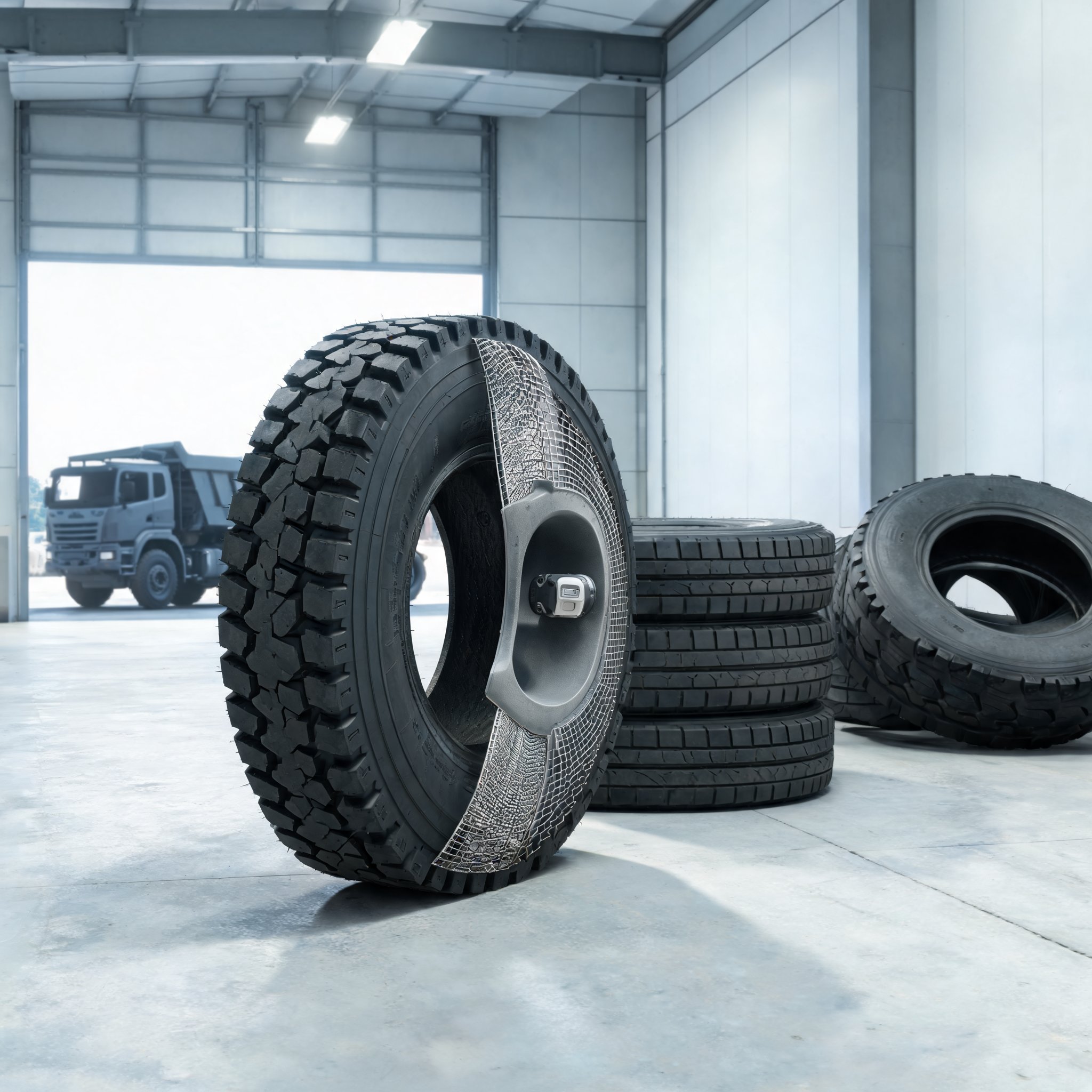
Continental Tires Americas is expanding its Sensor Ready tire portfolio with the Conti HSC 3 and Conti HDC 3 in 11R22.5 and 11R24.5 sizes. The tires are designed for demanding construction and mixed-service applications, where fleets need durable casings and practical ways to monitor tire condition.
The central change is a factory-engineered sensor pocket built into the tire during manufacturing. Previously, fleets that used tire sensors on these products relied on manually installed glued sensors. The integrated pocket is intended to make sensor installation faster and more consistent while providing a serviceable mounting point throughout the tire's life.
Continental also includes a dedicated Sensor Ready sidewall marking. The marking is meant to help fleets, dealers and retreaders identify compatible tires quickly, reducing uncertainty when tires move between vehicles, service bays and retread operations.
Designed for multiple service cycles
The sensor pocket remains part of the casing after the original tread is worn. That allows retreaders to remove and reinstall sensors without recreating a mounting location or applying new adhesive. Continental says the design can streamline retread operations, reduce labor and support continued tire monitoring through multiple retread cycles.
When paired with ContiConnect, Continental's digital tire monitoring solution, the tires can deliver pressure and temperature information to fleet managers. Continental says these data points can help identify maintenance issues before they become unplanned downtime, roadside events or premature tire removal.
Renato Sarzano, head of Truck Tires Americas at Continental, said digital tire monitoring is becoming more important for helping fleets improve uptime, safety and operational efficiency. He added that adding the two models to the Sensor Ready portfolio is intended to make connected tire technology easier for construction fleets to use and to help them maximize the value of their tire assets.
The expansion reflects a move toward embedding sensor readiness in commercial tires rather than treating it as an aftermarket step. For construction and mixed-service fleets, the appeal is practical: fewer installation steps, clearer compatibility checks and a mounting point that survives retreading. Continental is presenting the pocket as part of the casing's lifecycle value, not merely an accessory added at delivery.
The announcement focuses on the design and intended operational benefits; it does not quantify labor savings, monitoring performance gains or pricing for the new sizes. The stated benefits are tied to the sensor pocket and its use with ContiConnect, so results will depend on operating conditions, maintenance practices and how fleets use the monitoring data.