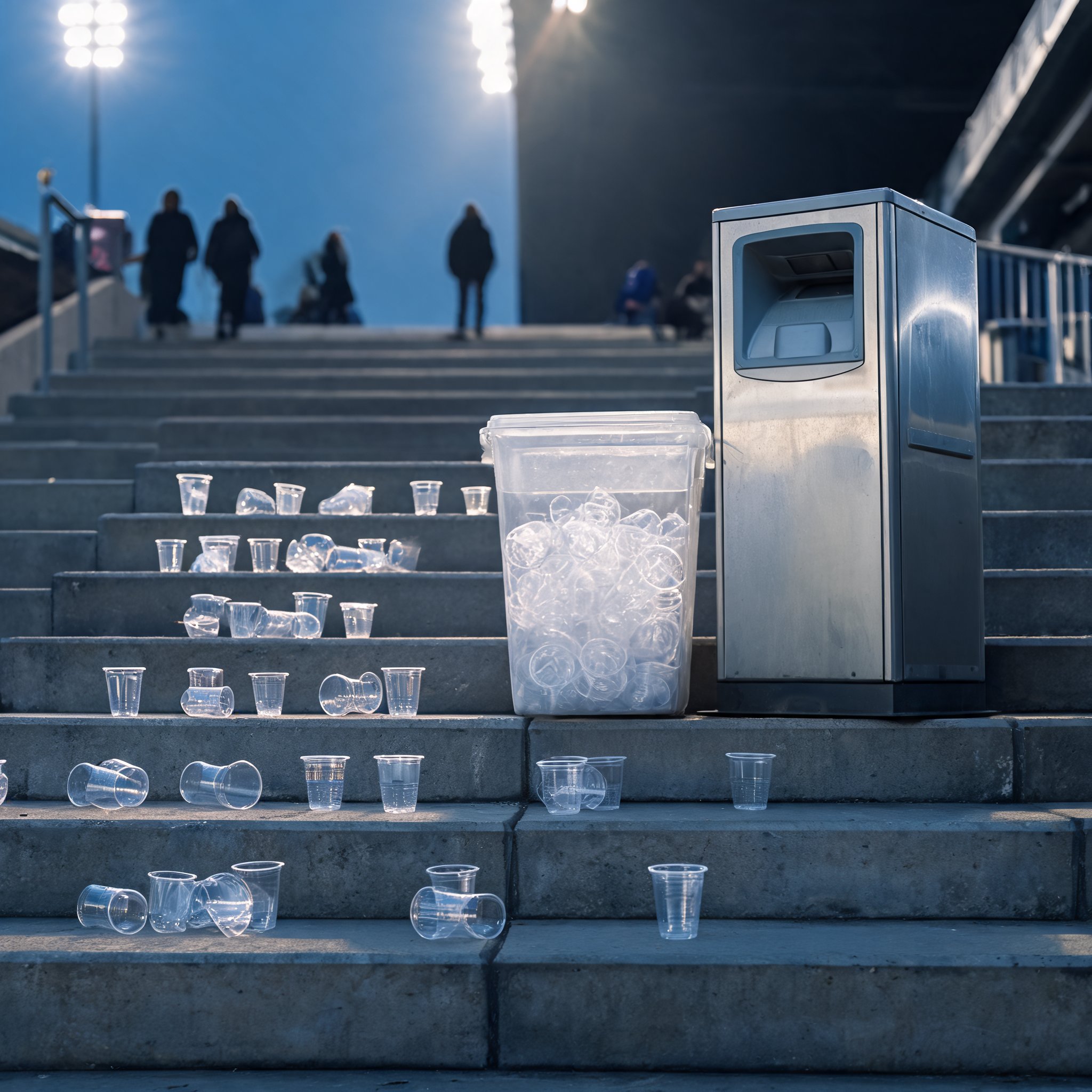
Liverpool supporters turned a Champions League visit to Austria into an unexpected source of cash by collecting discarded reusable beer cups under LASK's deposit-return scheme.
Reports said many fans spent the evening and the period after the match gathering cups from the stands and concourses to claim the cashback. The Austrian club has promoted a plastic-free stadium model and uses a deposit system to encourage the return of reusable containers. In practice, the arrangement gives spectators a direct financial reason to bring cups back into the collection loop rather than leaving them behind.
The scene places a fan-level incentive inside broader efforts to reduce single-use waste at football grounds. UEFA claims it is placing greater emphasis on circular-economy measures at its club competitions, a position that points to repeated use and return systems rather than one-way packaging.
Liverpool has also publicised its own recycling record at Anfield, saying more than one million plastic bottles have been recycled there over the past three seasons. The club's claim concerns bottles rather than cups, but it adds to the wider focus on waste handling at major venues.
For LASK, the cup returns served two purposes on the night: they kept reusable containers in circulation and gave visiting supporters a return on the cups they collected. The club's plastic-free stadium model relies on such participation, and the post-match rush showed how a deposit can change behaviour when crowds leave.