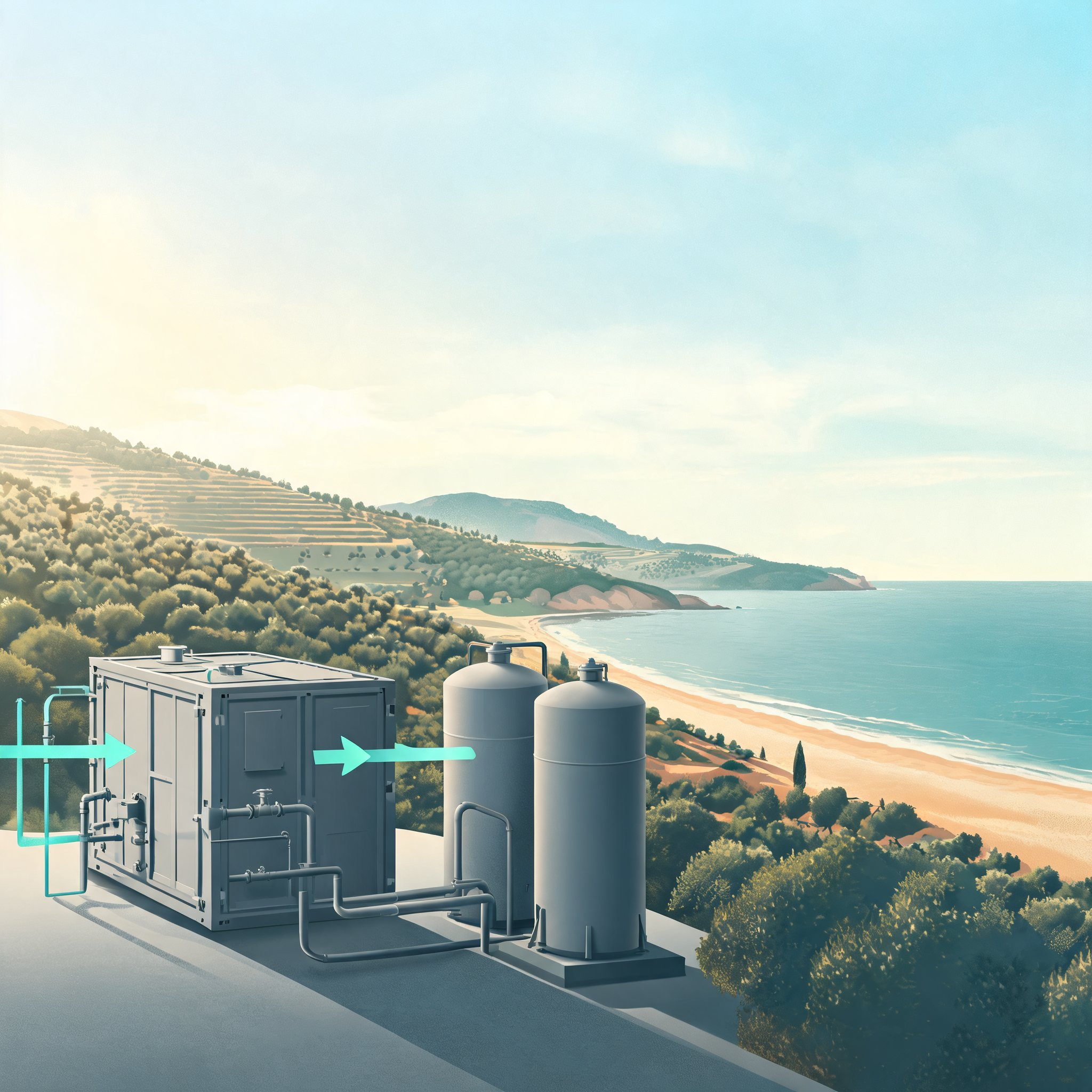
Metacon AB's wholly owned Greek subsidiary, Metacon S.A., has been awarded European Union project funding to develop and demonstrate hydrogen production from biomethane under the BIOH2VAP project. The effective amount covered by the grant is approximately €241,920, against a project budget for Metacon S.A. of €302,400.
The project will validate Metacon's reforming technology in an industrial biogas setting and assess the commercial potential of converting locally produced biomethane into renewable hydrogen.
Pilot plant in Ierapetra
A pilot plant will be constructed at an existing industrial biogas plant in Ierapetra, on the Greek island of Crete. The facility is to cover biogas upgrading, biomethane production and demonstration of reforming-based hydrogen generation.
Operation and data collection under industrial conditions are intended to allow the company to evaluate and refine technical performance and operating efficiency, and to prepare for commercial deployment.
Commercialization roadmap
Metacon said the project adds to the commercialization roadmap for its proprietary reforming technology and supports the development of hydrogen solutions that use renewable feedstocks.
The project also provides a platform for assessing how hydrogen production can be integrated with existing biogas infrastructure and local residue streams, with the aim of improving resource efficiency and strengthening the business case for circular hydrogen production.
Christer Wikner, President and CEO of Metacon, said the BIOH2VAP project gives the company a new industrial platform to demonstrate clean hydrogen production from biomethane and to optimize its commercial potential. He added that it expands the company's industrial testing base for its reforming technology and will support commercialization plans targeting future deployment at thousands of existing locations internationally where biogas infrastructure and local renewables are already available.