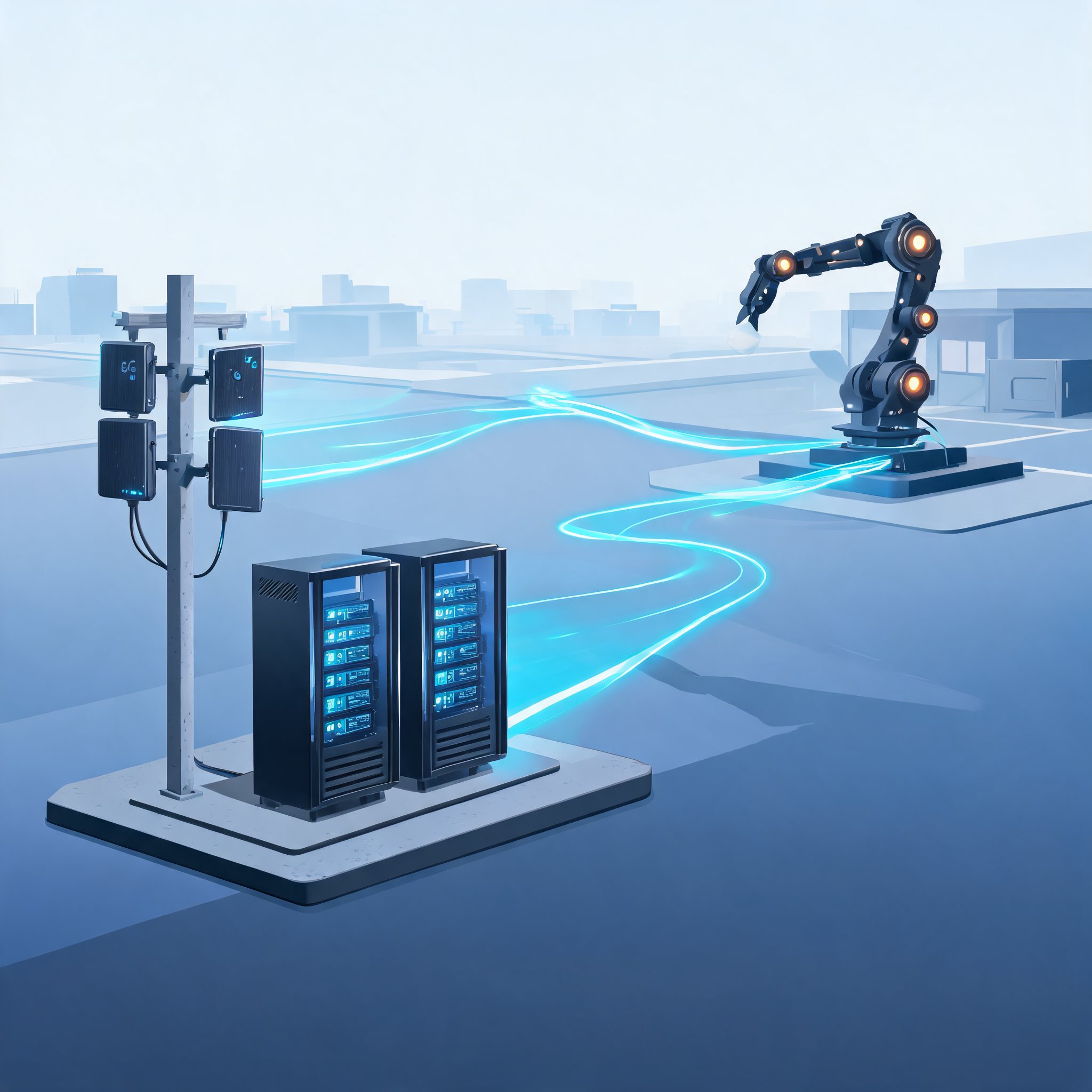
Nokia and NVIDIA are widening their AI-RAN work from reference designs and lab tests into live 5G environments. Nine operators in Europe, the Middle East and Africa are building or expanding NVIDIA-powered infrastructure, while Nokia is running anyRAN trials with BT, Deutsche Telekom, Elisa and Orange. Nearly 20 operators have publicly announced AI-RAN collaborations that use Nokia's anyRAN software and NVIDIA's Aerial RAN Computer. The question is no longer whether AI can be inserted into the radio network, but what operational and commercial case sustains it.
A single stack, a longer dependency chain
The technical package stacks Nokia's anyRAN software on NVIDIA's Aerial RAN Computer, with CUDA, Nemotron open models and Agent Toolkit embedded into Nokia's Autonomous Networks Suite and into third-party operations software from Cisco, TCS and NTT DATA. Dell, QCT and Supermicro supply ARC-ready servers; Red Hat OpenShift provides the cloud-native foundation. Combining these elements into one reference design can shorten integration work, because operators and vendors start from a defined combination rather than assembling each layer separately. That is a shorter path to a working system, but it also narrows the range of interchangeable components. It also creates a dependency: the radio software sits above NVIDIA's programming model at the radio layer, and Nemotron models are being folded into autonomous-network software by both Cisco and Nokia, extending that dependency into operations tooling.
The architecture assumes operators already control the costly physical estate: land, power, shell layer, spectrum and fibre. Adding accelerated compute at centralised, metro and cell sites lets them place models nearer to the machinery, emergency responders and handsets that consume them. It also allows the radio itself to run inference. That second point is where AI-RAN differs from merely running AI applications at an edge data centre: the radio access network becomes a compute location, not just a transport path.
Measured gain is real but modest
The most concrete performance figure in the disclosed material comes from Deutsche Telekom and Nokia lab measurements: AI-based channel estimation produced typical uplink throughput improvement in the region of 10 to 15 percent. That is a useful gain, but it is modest against the cost and complexity of building distributed compute across many sites. The constraint shifts to backhaul once inference moves outward. Nokia's 800G coherent pluggables indicate the capacity the company expects operators to need between sites, but they also underline that AI-RAN is a network-wide build, not a software upgrade confined to the radio.
The operator trials show a mix of workloads rather than one feature. Elisa completed Europe's first AI-RAN field trial, running voice, mobile data and vision AI together on one accelerated platform over 5G. Orange is introducing voice intelligence services for enterprises and emergency responders. Deutsche Telekom is working on physical AI for industrial customers, and BT is preparing live trials in the UK. Each use case has a different traffic profile and latency requirement, which makes the common platform attractive in principle but harder to optimise in practice.
Vendor vision meets financing reality
NVIDIA founder and CEO Jensen Huang framed the shift as telecom networks moving from carrying conversations to carrying intelligence. He said leading operators are turning land, power and connectivity into distributed AI infrastructure, bringing intelligence closer to industries, people and robots, and that working with Nokia extends accelerated computing into the radio network as a foundation for AI-native 5G. Nokia Chief Technology and AI Officer Pallavi Mahajan described the next connectivity era as one in which networks distribute intelligence, continuously optimise performance and enable new AI-powered services, including physical AI. She positioned the joint work as a software-defined foundation for getting more from spectrum today and for autonomous, AI-native 6G.
Those are supplier claims about direction, not evidence of commercial return. Until AI-service revenue materialises, operators carry the financing for distributed compute and backhaul. The suppliers of accelerated compute and RAN software hold the layer where incremental value would accumulate. That division matters because the 10 to 15 percent uplink gain does not, by itself, fund a broad build-out. Operators will need new paid services, improved spectral efficiency or lower operating costs at sufficient scale to justify the footprint. The business model therefore depends on converting network proximity into billable services.
The disclosed checkpoints cluster in 2027. BT's Birmingham live trial is slated for then, alongside Deutsche Telekom's field trials and Elisa's distributed deployment with commercial AI-RAN services. Those milestones will test more than technical integration. They will show whether backhaul capacity, site power and operations tooling can support AI workloads at live scale, and whether customers pay for services that run closer to the radio. They will also indicate whether the backhaul capacity Nokia's 800G coherent pluggables anticipate is available where compute is needed.
Nokia and NVIDIA have made the integration path more concrete by combining anyRAN, ARC, CUDA and Nemotron into one reference design. The remaining uncertainty is commercial and operational. AI-RAN may improve radio performance and create a new edge for AI services, but it also deepens operator reliance on NVIDIA's stack and asks them to finance distributed infrastructure before demand is proven. The 2027 trials will be the first serious test of whether that trade-off holds.