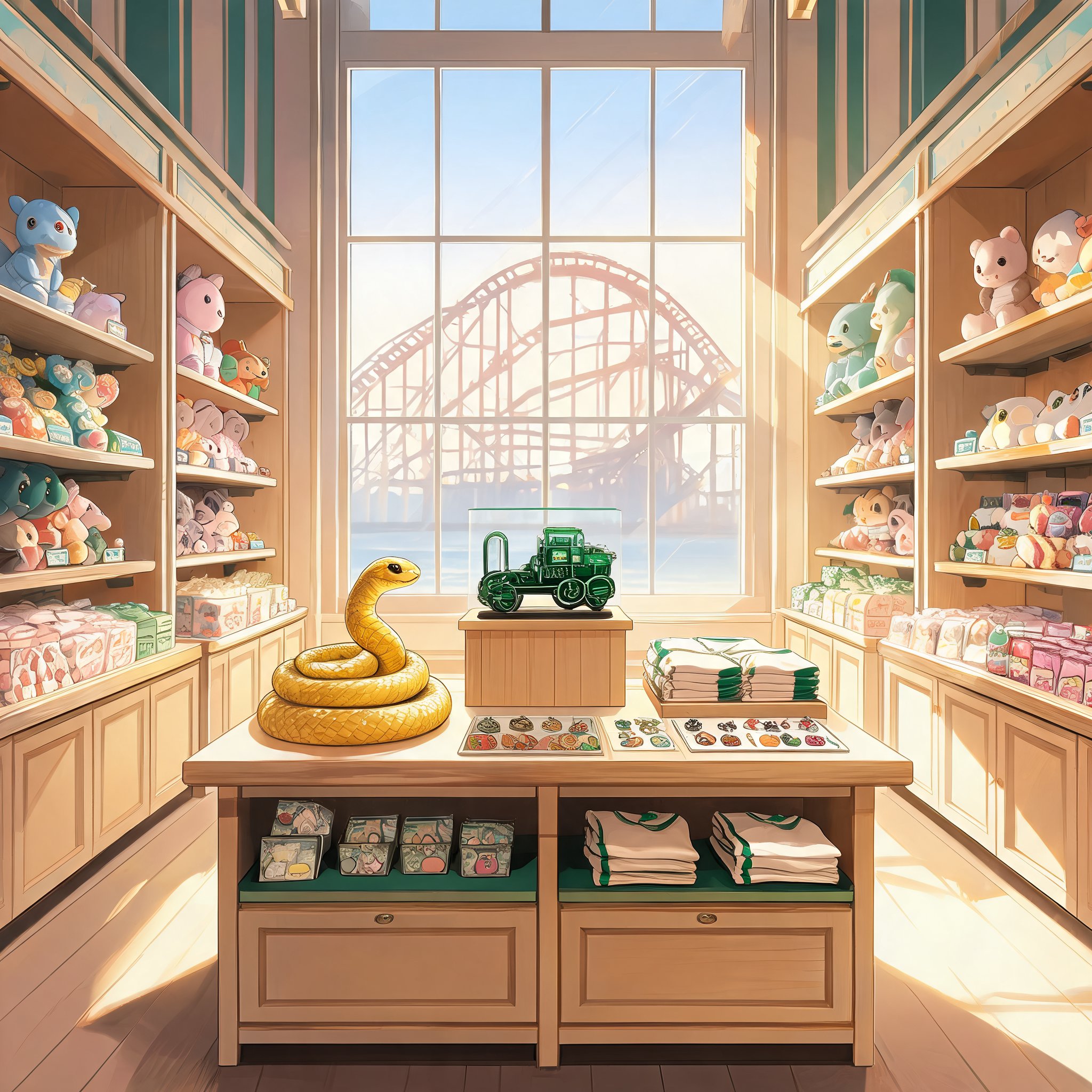
Pleasure Beach Blackpool, the 130-year-old seaside park known for its wooden roller coasters, the Big One and shows, is giving more attention to retail. Its flagship shop is at the main entrance in the Casino building, with outlets across the site. Damian Jackson, head of retail, says the aim is to offer carefully curated ranges that help guests remember their day, celebrate favourite attractions and continue the experience after they leave.
Jackson oversees stores, e-commerce, ride photography and merchandise development. He works with Amanda Thompson from initial concept through design brief, product development, sampling and approval. Jackson says the park does not simply put a logo on a product; each range must have a reason to exist, a defined customer and an authentic link to the resort.
Ranges built around attraction stories
Aviktas is an example. Instead of products carrying the ride logo, the team built the range around the attraction’s visual world: a golden snake, emerald colouring, mythology and mystery. Retail was involved early in the attraction’s development. A limited run of 50 models at £250 each sold out, which Jackson cites as evidence that guests will invest in premium collectables when a product has authenticity, detail and a strong connection to the attraction.
Different attractions need different treatments. ICON lends itself to a clean, contemporary, fashion-led approach, while heritage rides such as the Big Dipper and Grand National draw on archive artwork, engineering details, nostalgia and memories. Materials, colours, packaging and shop presentation are considered alongside the intended customer, demand, price points and production quantities. The final product must be distinctive and commercially viable.
Serving a diverse audience
The park can serve first-time families, school groups with limited spending money, teenage friends and couples, international tourists, lifelong fans and serious coaster enthusiasts on the same day. A family may want a traditional souvenir; an enthusiast may look for an accurate collectable tied to a particular ride. Teenagers may respond to confectionery and trend-led apparel, while heritage-minded visitors value nostalgia and the stories behind the resort.
Pleasure Beach builds its portfolio around different customer missions, price points and engagement levels. It offers impulse purchases such as confectionery, magnets, keyrings and badges; practical products including bottles, bags and ponchos; fashion-led apparel; children’s products and plush; and premium or limited-edition pieces for collectors. Attraction-specific merchandise sits alongside broader branding, licensed ranges and heritage collections. Jackson says this means a carefully edited range, not unlimited choice: every product needs a purpose, a target customer and an appropriate price.
Licensed ranges, heritage and services
Licensed brands require partnership between the park, the IP owner and approved suppliers. Pleasure Beach follows brand guidelines while considering how characters and stories are experienced at the park; its licensed offer includes Nickelodeon and Aardman’s Wallace and Gromit. To compete with online retailers, the park seeks relevance and exclusivity through exclusive designs, attraction references and personalisation.
Heritage is central because the resort has been part of family traditions for 130 years. It holds an archive of imagery, typography, posters, architecture and stories, which it reinterprets through contemporary apparel, homeware and collectables. The aim is to use authentic history in a fresh and desirable way, not to make everything feel old-fashioned. Playful assets matter: humour, colour and unexpected ideas make the range more accessible, with Mr Funshine merchandise cited as nostalgia given a contemporary twist.
The park offers gift wrapping and personalisation for guests who want a purchase to feel more personal and significant, and for items that cannot be bought from a general online marketplace. E-commerce extends the relationship year-round, allowing enthusiasts to follow new launches and previous visitors to reconnect with memories; online behaviour also gives the team insight into demand.
Operations and staff
Jackson says stock accuracy and availability are among the least glamorous and most critical parts of the operation. An outstanding product cannot generate revenue if it is in a stockroom, has not been reordered, is incorrectly priced or is unavailable where guests expect it. Basics include accurate deliveries, stock movement, replenishment, pricing, signage and daily compliance checks.
Retail staff provide energy, knowledge and personality. They can demonstrate a product, explain the story behind a range, suggest an addition and recognise when a guest needs help. Retail can also involve entertainment, such as making candy floss, helping a child build a teddy or personalising a gift. Jackson encourages teams to act as hosts, storytellers and brand ambassadors, whose feedback can reveal emerging requests.
Pleasure Beach wants retail to feel like another chapter of the day rather than an obligatory gift shop at the exit. That means considering retail during the planning of attractions, events and guest journeys. Themed environments, demonstrations, characterful displays, confectionery experiences, personalisation, ride photography and interactive selling can make shopping entertaining. Retail spaces should reflect their location, so a thrill-ride shop feels different from a children’s store or confectionery outlet.