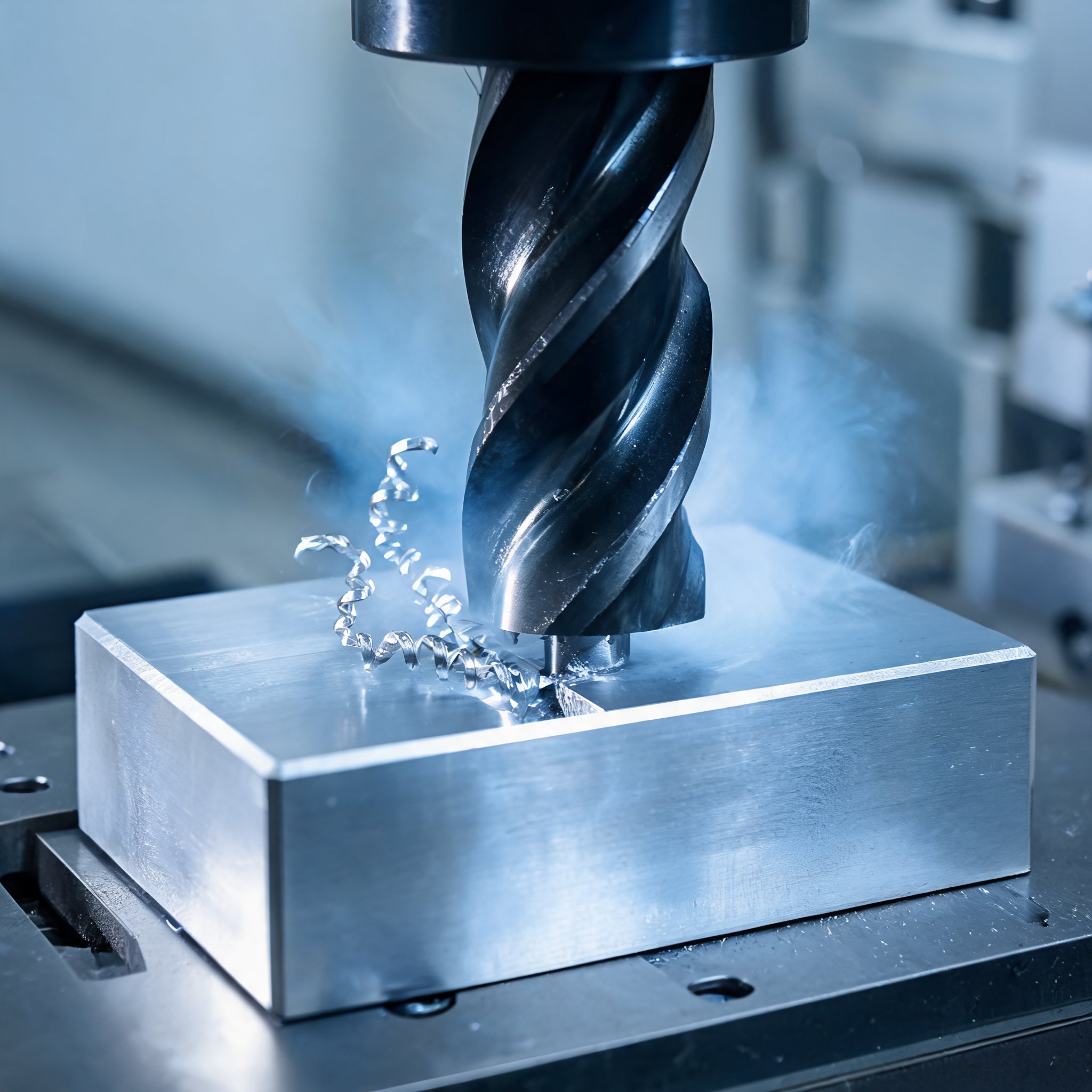
Seco has introduced the Stabilizer™ series of milling tools, a new end mill line the company says is designed to reduce power consumption by around 20 percent while delivering stable, versatile and reliable machining of aluminum and other nonferrous metals across a wide range of applications.
The series centers on three end mills — the Stabilizer ST4531, ST4521 and ST4321 — which Seco says are engineered to perform at lower cutting forces and to improve chip control. According to the company, the tools are suited to both conventional and high-speed milling strategies.
By lowering power demand, Seco says the tools help manufacturers run efficiently even on machines with limited spindle capacity, reducing energy costs while maintaining productivity and surface quality.
Design aimed at stability and tool life
To minimize vibration and chatter, the tools feature a cylindrical margin, a polished K-Land and a specialized coating that reduces material adhesion. Seco says these design elements support smoother finishes, improved chip evacuation and longer tool life when machining aluminum.
Applications and geometries
The Stabilizer range is described as covering multiple milling operations, including:
- side milling
- slotting
- profiling
- plunging
- ramping
- helical interpolation
The tools are available in square, radius, chamfer and ballnose geometries, which Seco says offer flexibility for aerospace, automotive and general engineering applications involving nonferrous metals. The company presents the series as combining energy efficiency with the flexibility needed across different nonferrous machining tasks.