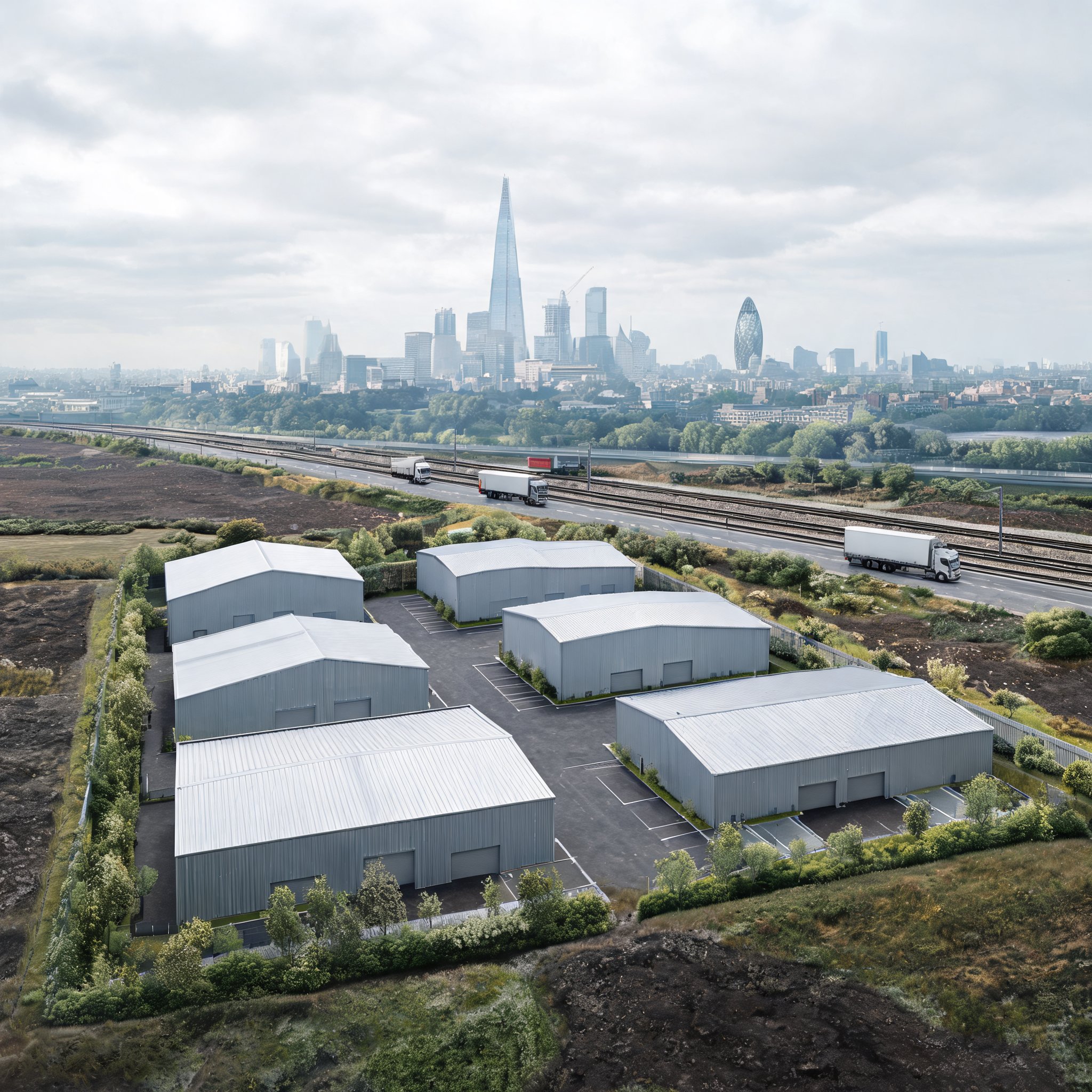
Verdion and L&G’s Industrial Property Investment Fund (IPIF) have received planning permission for a £30 million urban logistics scheme in the London Borough of Greenwich’s West Thamesmead Opportunity Area.
The project, LiteHub Greenwich, will be developed speculatively as a multi-let industrial park. It is designed to provide 78,986 sq ft of new floorspace across six small to mid-box units, with occupation targeted from the fourth quarter of 2027.
Individual units will range from 5,555 sq ft to 16,000 sq ft. The plans target a BREEAM “Excellent” rating and an EPC “A+” rating, supported by a whole-life carbon focus, high energy performance and resilience, biodiversity-positive measures, and supply chain and site social safeguards.
The development will occupy a 2.6-acre brownfield site within an established industrial area on Nathan Way. According to the announcement, the location is five miles east of the Blackwall and Silvertown Tunnels and nine miles from the M25, near Berkeley Homes and Peabody’s 1,900-home Lombard Square development.
Verdion will develop the site on behalf of L&G, which will own the asset. John Clements, executive director of Verdion and head of its UK activity, said the Greenwich location offered significant value-creation potential. He pointed to high volumes of new residential development nearby and constrained industrial and logistics supply, adding that the scheme is intended to provide a modern multi-let park for occupiers seeking space close to the City and the M25.
Clements also said LiteHub Greenwich would become the first asset in Verdion’s UK-wide urban logistics platform, which is focused on brownfield redevelopment opportunities near major population centres and underpinned by strong environmental, social and governance credentials.