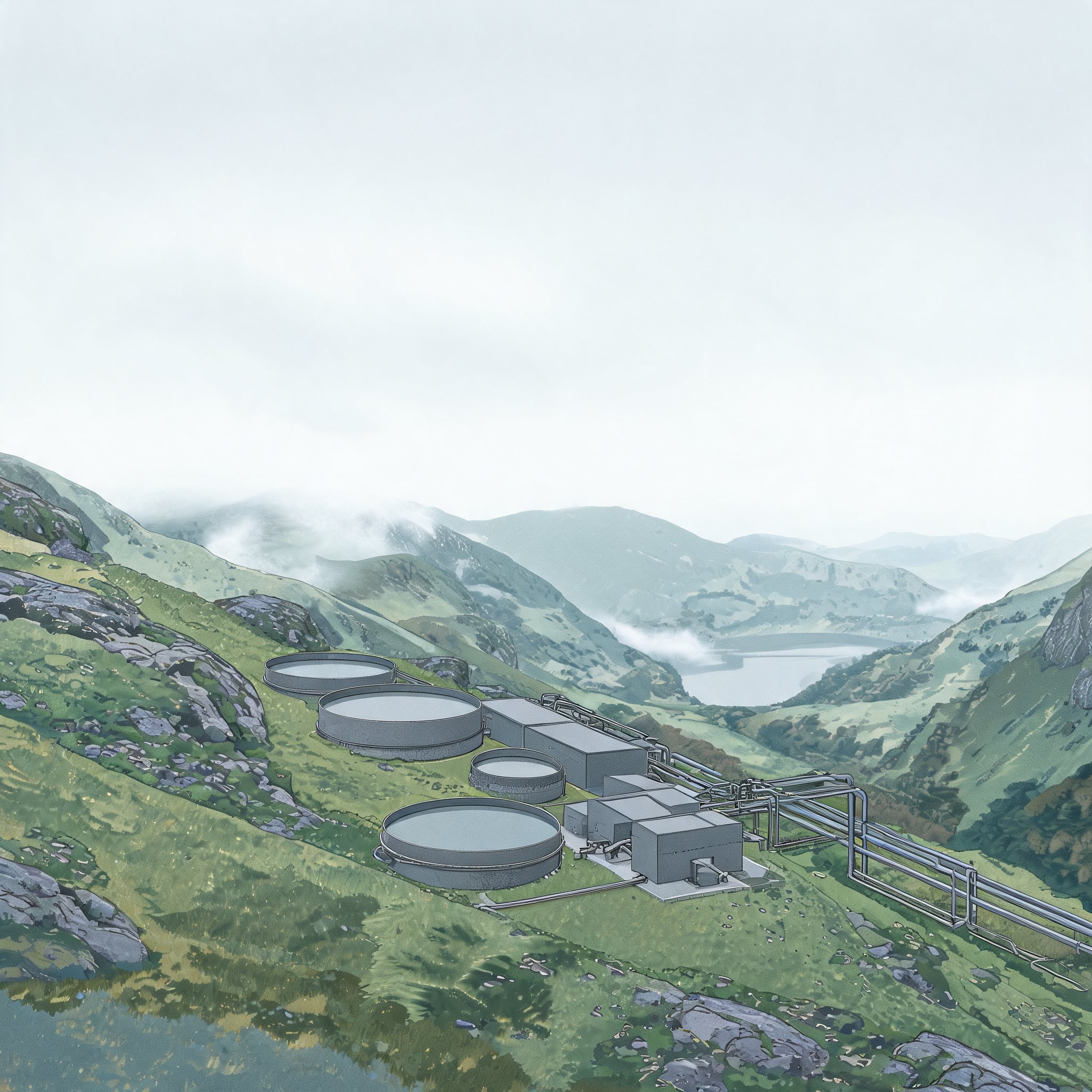
Welsh Water has lodged plans for the Cwm Taf scheme, which the company describes as the biggest infrastructure project in its history and a replacement for treatment assets that have served the region for more than a century.
Contractors and investors are already being sounded out ahead of procurement, which is due to start in early 2027 under Ofwat's Direct Procurement for Customers model.
The main construction package centres on a new water treatment works at Dan-y-Castell Farm near Merthyr Tydfil. Alongside the treatment plant, it covers treated water storage, a new pumping station at Pontsticill and the connecting pipelines.
A second project will upgrade Llwyn-onn Water Treatment Works in the Bannau Brycheiniog National Park, adding water storage and pipeline connections at the site.
Together the two elements would provide new treatment capacity, treated water storage and the pipe connections needed to move water between the works and the wider network.
The plans identify the sites and principal components of each package, while the commercial route is being prepared through the DPC procurement that begins next year. The company presents the scheme as the successor to assets that have been in service for over a hundred years.