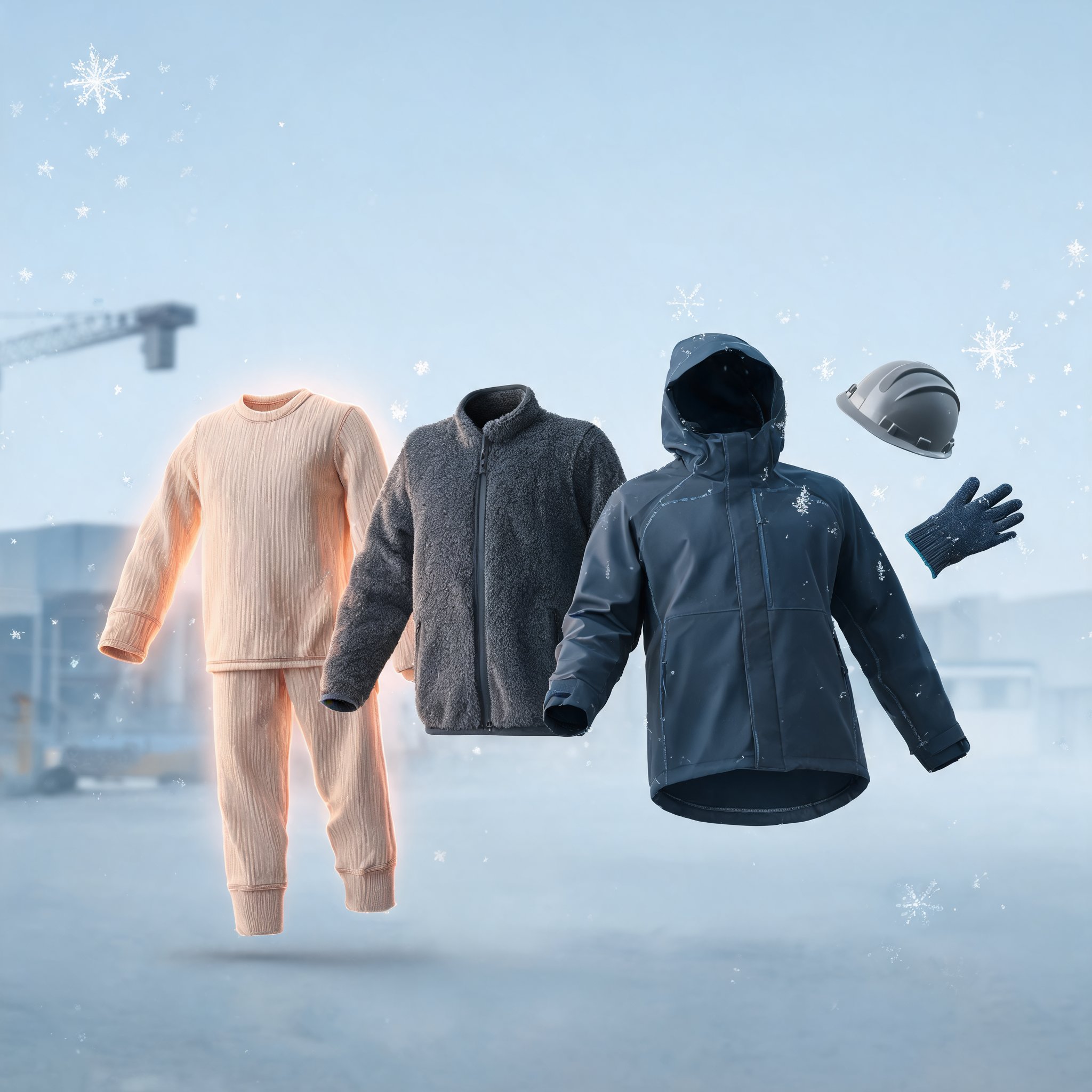
Outdoor work in winter raises the risk for employees when personal protective equipment (PPE) is selected or combined incorrectly, according to guidance from CWS Workwear International GmbH, based in Dreieich, Germany. The workwear supplier names five typical protection gaps in that guidance.
Shorter daylight hours, wetness and frost change the hazard situation at many outdoor workplaces, the company notes. Often, however, the PPE in use is not adjusted to match those changed conditions.
According to the guide, the gaps arise mainly from the way clothing layers interact. Individual garments may carry certification, yet the combination actually worn does not fulfil the requirements of the relevant standards.
Certification of single items does not cover the ensemble
The distinction matters for anyone assembling winter workwear from separate components: a certified outer jacket, mid-layer and base layer do not automatically add up to a compliant outfit. The assessment has to cover the layers as they are worn together, and that is where the five gaps described by CWS Workwear sit.
- Changed conditions: short days, wetness and frost alter what outdoor work demands of protective clothing.
- Layer interaction: protection gaps emerge in the interplay of the layers rather than in a single garment.
- Combination check: the worn combination, not the individual item alone, is what has to meet the standard.
The guide's point is not that certification of individual garments is unnecessary, but that it does not describe the combination as worn. Its stated focus is therefore on how winter PPE is put together, not only on how each piece is chosen.